 26 januára, 2025
  admin
admin 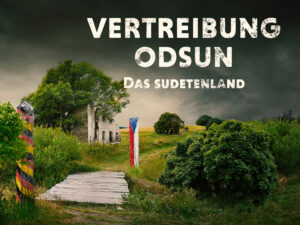

TITUL: Universum History: Vertreibung – Odsun: Die Geschichte der Sudetendeutschen Documentary / Historical Austria / Germany / Czech Republic, 2020, 90´ (Alternative 2×52 min) Director: Matthias Schmidt, Vít Poláček Starring: Petr Mikšíček
SYNOPSIS The mass displacement of the original German population from Czechoslovakia between 1945 and 1948 is a questionable aspect of Czech-German relations and also the Czech interpretation of its own history. The fact that this aspect was opened only relatively recently also contributes to the fact that the topic is still discussed emotionally. The co-production project of Czech Television, German MDR, Austrian ORF and the German-French station Arte lets witnesses and survivors of deportation from both sides of today’s border speak. It talks about the stories of the individual participants in the deportation and their personal opinions, the ambition to bring empathy through the faces and fates of specific people, which would give hope for the most objective narration of what happened. The authors of the project aim to The issue of the displacement event in the broad context of its causes and consequences. With the help of the involved organizations Antikomplex and Pamět národa, the selection of the protagonists was managed in such a way that the resulting mixture of witnesses covered a wide range of diverse fates – those who did not want to leave and were expelled, and those who wanted to leave but were forced to stay, Germans who The Nazis made pacts, even those who resisted them and piqued them twice… The film tells stories full of colors, twists and turns, such which reflect the ambivalence and multifacetedness of the entire history. One such story is that of Siglind Drostová from Nové Jičín. At the age of 15, after the end of the war, she was sent to do forced labor in Vlašimi. She remembers the rages and atrocities of the deportation, but also the selfless help she received from many Czechs. The film also includes excerpts from the diary of her father, Adolf Purr, who was deported to the internment camp for Germans in Auschwitz after the war. „My father had the diary hidden under his bed until his death in 1989, deportation was not discussed in the GDR, it was not allowed to be discussed. Today, Siglind Drostová regularly goes to her old home, maintains old contacts and establishes new ones, writes for regional newspapers and helps take care of historical buildings and places. The statements of eyewitnesses such as Siglind Drostová are not limited to the past, but also touch the present. Thanks to this, we can show different ways of reflection of displacement in three different states (FRG, GDR, Czechoslovakia), and then relate these to the common presence in today’s Europe.
Film Review
Televízny dokument dvojice východo-nemeckého a českého autora je relatívne vyváženo a moderne spracovanou látkou televízneho typu o doposiaľ ostrakizovanej dejinnej téme. Škoda, že jednak nejde ešte hlbšie do európskych dejín, viac nevyužíva bohatý archívny materiál, a ani sa nezmieňuje v širšom zábere o detailoch krutosti a svojvôle oných dávnominulých časov.
Tento televízny film je však zámerom i spracovaním užitočnou dobre deduktívne vybalansovanou pripomienkou turbulentnej histórie Európy. Projekt je po doposiaľ rešpeektovanom ideologickom tabu podnetným i keď na mnohých miestach – len ilustratívnym počinom bez nároku komplexnosť i hĺbkové a analýzy, či širšie emócie preživších.
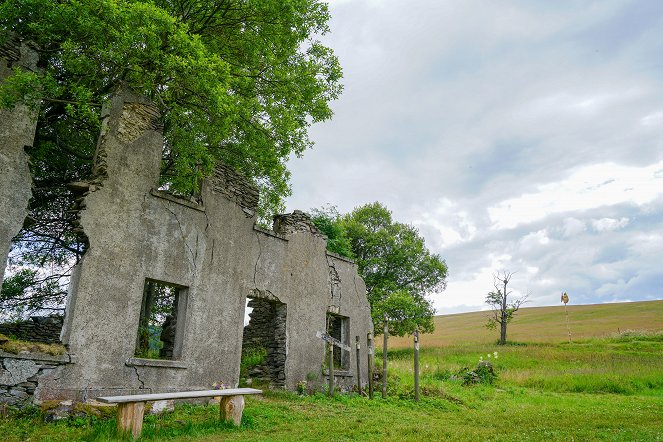
HISTORICKÁ POZNÁMKA: Just a few unforgettable reasons: Lidice, Ležáky, Chatyň, Cimenná, Kalište, Kľak, Ploština, Javoričko, Prlov and many others. But the most important fact is that the expulsion of Germans from Czechoslovakia and Poland was actually invented by England at the Potsdam Conference through Churchill (who was replaced at the conference by Clement Attlee after losing the elections in July 1945) and he convinced the governments of the USSR and the USA to accept it as a favorable solution. It also says about compensation for damages. The result of this solution was the Potsdam Conference Protocol of August 2, 1945, binding for everyone. The forced expulsion was carried out precisely on its basis. The then President Beneš would not have achieved anything if it were not for the will of these world powers. So it is obvious that Czechoslovakia could not just expel the Germans. The expulsion itself was logistically prepared by their Inter-Allied Commission in Germany. The Germans were gradually and systematically deported to the American and Russian zones, according to a precise plan, mostly during 1946. Czechoslovakia was the executor and therefore has no legal or material responsibility for this deportation. The International Commission even expressed public recognition of Czechoslovakia for the humane and complete implementation of the deportation of the Germans (yes, of course there were some excesses). Any claims regarding the deportation should be made by the German government and the truly injured Germans to the then victorious powers, the USA, Great Britain and the Soviet Union. But by the treaty of 26.5.1952, Chapter 6, Article 3 and Chapter 8, Articles 1 and 3, Germany can never again assert claims regarding confiscated German property. From this treaty (or rather from its ratification) it is clear that all property of individual Germans in the territory of Czechoslovakia passed into the full ownership of Czechoslovakia and its citizens, as a mandatory payment for reparations for all war damage caused by the Germans.
In 1921, Czechoslovakia had 13.5 million inhabitants, of which 6,850,000 were Czechs, 3,123,000 Germans, 1,910,000 Slovaks, 745,000 Hungarians, 461,000 Ruthenians, 1,80,000 Jews and 75,000 Poles. Therefore, do not be surprised at the Germans that they did not want to be only a national minority in the newly accustomed state – Czechoslovakia, and that is also why Masaryk invented the term Czechoslovak nation.
 Posted in